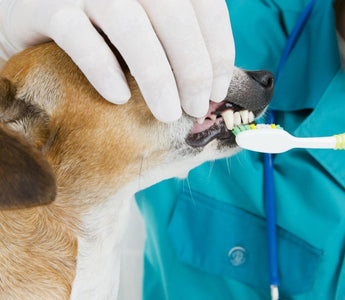
Lactoferrin is a naturally occurring protein found in milk, saliva, tears, and other body secretions of mammals, including dogs. It's included in some pet oral-care products because it's a naturally occurring component of saliva, and manufacturers may incorporate it into formulations designed to complement a dog's oral-care routine. This article walks through what lactoferrin actually is, why it shows up in dental gels and rinses, what veterinary research does and doesn't confirm, and how it fits alongside brushing, chews, and professional cleanings.
If you've searched for "lactoferrin for dogs" because you spotted the ingredient on a product label, you're likely trying to figure out whether it's worth paying attention to or just another buzzword. That's a fair question, and the honest answer sits somewhere between "interesting biology" and "proven miracle ingredient." Pet owners who want a broader look at oral-care products designed for dogs and cats can explore that territory once the ingredient itself makes sense.
What Is Lactoferrin?
Lactoferrin is an iron-binding glycoprotein, meaning it's a protein built to grab onto and hold iron molecules. It was first identified in cow's milk in the late 1930s and later found to be the dominant iron-binding protein in human milk as well. Since then, researchers have documented lactoferrin in a wide range of mammals, including dogs, cats, horses, and cattle.1
Beyond milk, lactoferrin turns up in tears, saliva, mucus, and the granules of certain white blood cells called neutrophils.2 Lactoferrin occurs naturally in several secreted fluids, including saliva, where it is one of many proteins present as part of normal physiology.1
Lactoferrin has two lobes, each capable of binding a molecule of iron. This iron-binding structure is one of the characteristics that has attracted research interest. Much of the detailed research into this biological activity comes from laboratory and human studies rather than controlled clinical studies of oral-care products in dogs.2
Why Is Lactoferrin Used in Dog Oral Care Products?
Lactoferrin is included in some dog oral-care formulations because it's a naturally occurring component of saliva. Its iron-binding structure is one of the characteristics that has attracted interest in oral-care research. Saliva naturally contains a variety of proteins and enzymes, including lysozyme, lactoperoxidase, and lactoferrin, as part of normal oral physiology.3
Formulators may include lactoferrin in a gel, rinse, or powder because it is already a naturally occurring component of saliva. Its inclusion provides one way to incorporate this well-characterized protein into a broader oral-care formulation intended for routine use.
This is different from adding a synthetic antiseptic or a pharmaceutical agent. Lactoferrin's appeal to formulators is largely about biological plausibility: it's already present and its mechanism is understood at a basic level. None of that is the same as saying a specific product has been proven to change clinical outcomes in dogs, which is a distinction worth holding onto as you read further.
Search interest around phrases like "lactoferrin for dog teeth" and "lactoferrin oral care" tends to reflect pet owners noticing the ingredient on a label and wanting context before they decide whether it belongs in their dog's routine. Understanding the "why" behind its inclusion is the first step; the next is looking honestly at what's actually been studied.
What Does Research Say About Lactoferrin for Dogs?
Much of the detailed research involving lactoferrin and oral health comes from human dentistry and laboratory research rather than controlled veterinary clinical trials, and that distinction matters. Researchers have investigated lactoferrin's biological characteristics and its relationship with the oral environment. However, findings from human or laboratory studies should not be interpreted as proof that a lactoferrin-containing oral-care product produces the same outcomes in dogs. Canine-specific research is more limited, so product expectations should be based on evidence specific to the formulation and its intended use.
A study evaluating salivary biochemistry in dogs with varying degrees of plaque, calculus, and gingivitis identified lactoferrin among the naturally occurring proteins found in saliva, although the study's biomarker testing focused on other salivary parameters rather than directly measuring lactoferrin's clinical effect.^3 This reflects where the field currently stands: dogs naturally produce lactoferrin as part of normal oral physiology, while controlled clinical evidence evaluating specific outcomes from lactoferrin-containing oral-care products in dogs remains limited.
Veterinary dentistry as a discipline places significant weight on evidence generated specifically in dogs and cats, largely because oral anatomy, saliva composition, diet, and chewing behavior differ enough from humans that findings don't automatically transfer.7 The Veterinary Oral Health Council (VOHC), the group that reviews plaque and calculus control claims for pet dental products, evaluates products using standardized animal testing protocols rather than accepting human research as a substitute.8 That's a useful reminder for any pet owner comparing an ingredient's human research to its expected role in a dog's mouth.
The evidence supports a more measured conclusion: lactoferrin is a naturally occurring, well-characterized protein found in saliva, and its inclusion in oral-care formulations is based on its established presence in normal oral physiology. However, specific controlled evidence demonstrating clinical outcomes from lactoferrin-containing oral-care products in dogs remains limited. That's a very different statement from claiming the ingredient treats or prevents a dental disease, and it's the framing this article sticks to throughout.
Where Does Lactoferrin Fit Into a Dog's Oral Care Routine?
No single ingredient or product replaces a full oral-care routine. The American Veterinary Dental College (AVDC) identifies daily tooth brushing as the single most effective method of maintaining a dog's oral health between professional dental exams, because brushing physically disrupts the bacterial film (plaque) before it has a chance to mineralize into tartar.7 Products like gels, wipes, water additives, and dental chews are generally positioned as supportive tools around that core routine, not replacements for it.
A lactoferrin-containing gel fits most naturally as an easy, low-effort addition for dogs who tolerate having something applied along the gumline, especially for owners whose dogs resist a toothbrush. It can be layered onto a routine that already includes brushing when possible, appropriate chew items, and regular veterinary checkups. For dogs who won't accept brushing at all, pairing a gel with a mechanical option, such as a textured finger wipe designed for the mouth, can help address the plaque-removal side that a gel alone doesn't cover. Rx Vitamins has written separately about how finger wipes designed for daily hygiene can make that mechanical step more manageable for pets who dislike a brush.
Veterinary oral hygiene guidance is also clear that home care works best as a long-term habit rather than an occasional effort, and that professional dental evaluation remains necessary when a dog shows signs like persistent bad breath, visible tartar, reluctance to chew, or drooling.7 Home oral-care products, lactoferrin-containing or otherwise, are meant to support a healthy mouth between those veterinary visits, not to diagnose or manage an existing dental condition on their own.
Lactoferrin Oral Gel vs. Other Dog Dental Care Products
Pet owners researching lactoferrin often want to know how a gel compares to more familiar formats. Each option has a different practical role in a routine, and none is inherently the "correct" choice for every dog.
| Format | How It's Used | Practical Role in a Routine |
|---|---|---|
| Oral gel (e.g., lactoferrin gel) | Applied directly along the gumline with a finger or applicator, no rinsing needed | Targeted, low-effort way to complement a regular oral care routine between brushings; well suited to dogs who resist a brush |
| Toothbrush and pet-specific toothpaste | Manual brushing, ideally daily | Mechanically disrupts plaque before it hardens; considered the foundation of home dental care |
| Dental wipes | Wrapped around a finger and wiped along teeth and gums | Mechanical alternative for dogs who won't accept a brush; useful transition step toward brushing |
| Dental chews | Chewed by the dog, typically daily | Mechanical abrasion during chewing; effectiveness varies by product and chewing style |
| Water additives | Mixed into the dog's drinking water | Passive, easy to maintain daily; best used alongside a mechanical method rather than alone |
The formats aren't competing with each other so much as offering different ways to support a consistent oral-care routine. A gel provides a different application format from brushing or wiping, allowing the oral-care formula to be applied directly along the gumline. Depending on the individual pet, more than one oral-care method may be incorporated into a routine under veterinary guidance.7
Lactoferrin for Cats:
Lactoferrin is naturally present in cats as well as dogs, and some oral care products containing lactoferrin are formulated for both species. When choosing an oral care product for your cat, follow the product directions carefully. If your cat has existing oral health concerns, discomfort, difficulty eating, or noticeable changes in the mouth, consult your veterinarian.
Lactoferrin in Rx Vitamins Perio Care Rx
Rx Vitamins offers Perio Care Rx, an oral gel formulated for dogs and cats that features lactoferrin as part of its oral-care formula. The gel is alcohol-free and formulated to be non-irritating.
Positioned within a broader oral-care routine, Perio Care Rx is meant to support gum tissue health rather than to treat or resolve an existing dental condition on its own. For pet owners looking for a targeted gel format that's simple to apply without brushing, it offers a way to incorporate lactoferrin directly into a daily or periodic oral-care habit, alongside brushing, wipes, or dental chews as appropriate for the individual dog. As with any oral-care product, it works best as one component of a routine that also includes regular veterinary dental checkups, particularly for dogs already showing signs of gum irritation or tartar buildup.
Frequently Asked Questions About Lactoferrin for Dogs
What is lactoferrin for dogs?
Lactoferrin is a naturally occurring, iron-binding protein found in a dog's saliva, tears, and milk, and it's also produced by certain immune cells. In oral-care products, concentrated lactoferrin is added to gels or other formats to complement this existing salivary protein as part of a broader dental hygiene routine.
Why is lactoferrin included in dog oral care products?
Formulators include lactoferrin because it is a naturally occurring component of saliva, and its iron-binding structure is one of the characteristics that has attracted interest in oral-care research. Its inclusion in oral-care formulations is based on its presence in normal oral physiology, while product-specific clinical evidence in dogs remains more limited than the human dental literature.
How is a lactoferrin oral gel used for dogs?
A lactoferrin oral gel is typically applied directly to the gums and teeth with a finger or applicator, without rinsing. It's generally used as part of a daily or regular oral-care routine and works alongside, rather than instead of, mechanical plaque removal such as brushing or dental wipes.
Can cats use lactoferrin oral care products?
Lactoferrin is naturally present in cats too, and some oral-care products, including Perio Care Rx, are formulated for both dogs and cats. Cats with a diagnosed oral condition should be evaluated and managed by a veterinarian rather than relying on an over-the-counter product alone.
Is lactoferrin a substitute for brushing a dog’s teeth?
No. A lactoferrin-containing oral care product should not be considered a replacement for mechanical cleaning or professional veterinary dental care. Products such as oral gels can instead be incorporated into a broader oral care routine according to their label directions.
Can lactoferrin be part of a dog’s regular oral care routine?
Lactoferrin is included in some oral care formulations for dogs. How often a particular product should be used depends on its formulation and label directions. Follow the directions provided with the product and ask your veterinarian about an appropriate oral care routine for your dog.
Building a Consistent Oral Care Routine for Your Dog
Lactoferrin is one of several ingredients used in oral care formulations for dogs, but no single ingredient replaces a complete oral care routine. Consistent home care, mechanical cleaning when appropriate, regular veterinary checkups, and professional dental care all have distinct roles.
For pet owners interested in adding an oral gel to their routine, Perio Care Rx provides a convenient option formulated for dogs and cats. Always follow the product directions and talk with your veterinarian if your pet has existing oral health concerns.
You can also explore our oral care collection to compare additional formats and find an option that fits your pet’s routine.
References
- Manzoni, P. "Lactoferrin from Milk: Nutraceutical and Pharmacological Properties." Pharmaceuticals. PubMed/PMC: PMC5198036
- Kell, D.B., Heyden, E.L., Pretorius, E. "The Biology of Lactoferrin, an Iron-Binding Protein That Can Help Defend Against Viruses and Bacteria." Frontiers in Immunology, 2020. PMC7271924
- "Evaluation of Salivary Biochemistry in Dogs with and without Plaque, Calculus, and Gingivitis: Preliminary Results." Animals (MDPI). PMC9101074
- "Origin of MMP-8 and Lactoferrin Levels from Gingival Crevicular Fluid, Salivary Glands and Whole Saliva." PMC8340507
- "Application of Lactoferrin and α1-Antitrypsin in Gingival Retention Fluid to Diagnosis of Periodontal Disease." PMC6247577
- Ueta, E. et al. "Effects of Orally Administered Lactoferrin and Lactoperoxidase-Containing Tablets on Clinical and Bacteriological Profiles in Chronic Periodontitis Patients." PMC3124295
- American Veterinary Dental College. "Home Care for Dogs" and related owner resources. avdc.org
- Veterinary Oral Health Council. Product review protocols and accepted product listings. vohc.org
- Hung, Y.P., Yang, Y.P., Wang, H.C., et al. "Bovine Lactoferrin and Piroxicam as an Adjunct Treatment for Lymphocytic-Plasmacytic Gingivitis Stomatitis in Cats." The Veterinary Journal, 2014.
- American Veterinary Dental College. "Home Care for Cats." avdc.org