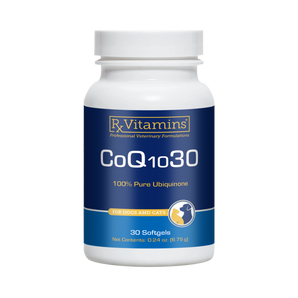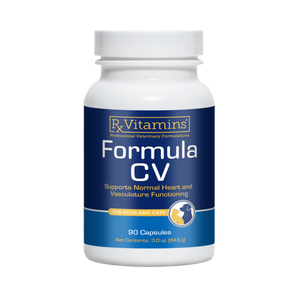
Your vet just said the words "CoQ10 supplement" and walked out of the room.
Now you're staring at your dog, wondering what that actually means.
You're not alone. Thousands of pet parents hear this recommendation every year and go straight to Google for answers.
Here's the problem. Most articles online give you a random dosage number and move on. They don't explain why your vet reached for CoQ10 in the first place.
This guide fixes that. We'll walk through what CoQ10 does, when vets actually prescribe it, and how to dose it safely, straight from the veterinary-exclusive side of the industry.
RxVitamins has formulated nutraceuticals trusted by veterinarians since 1998. So let's break this down the way your vet would.
What Is CoQ10 and Why Does Your Dog's Body Need It?
CoQ10 (Coenzyme Q10) is a natural compound every cell in your dog's body uses to produce energy. It's concentrated in the heart, kidneys, and liver, and levels drop with age, illness, and certain medications.
Think of CoQ10 as the spark plug for your dog's cells.
It fuels the mitochondria, the tiny engines inside every cell that create energy. Without enough CoQ10, those engines start to sputter.
CoQ10 also works as a powerful antioxidant. It protects cells from oxidative stress, the everyday wear and tear that builds up as dogs age.
Why CoQ10 Levels Drop as Dogs Get Older
Puppies and young adult dogs usually produce plenty of CoQ10 on their own.
But aging slows that natural production down. So do certain chronic conditions and common medications like statins.
This is exactly why senior dogs and dogs with ongoing health issues are the ones vets watch most closely for CoQ10 support.
When Do Vets Actually Recommend CoQ10 for Dogs?
Vets typically recommend CoQ10 for dogs with heart conditions, kidney disease, cancer treatment support, gum disease, or general energy decline in senior dogs. It's rarely a first-line supplement for healthy young dogs.
This is the part most blogs skip. Here's when CoQ10 actually earns a spot on your dog's supplement list.
Heart Conditions Like Mitral Valve Disease
Heart disease is the number one reason vets bring up CoQ10.
Dogs with mitral valve disease or cardiomyopathy rely heavily on efficient cellular energy. Their heart muscle works overtime, and CoQ10 helps support that demand.
Small breeds prone to mitral valve issues are watched especially closely as they age.
Chronic Kidney Disease (CKD)
Kidneys are packed with mitochondria and burn through energy fast.
When kidney function declines, cellular stress rises right along with it. Vets often add CoQ10 to a broader kidney support plan.
Cancer Treatment and Chemotherapy Support
Some chemotherapy drugs, like doxorubicin, can stress the heart during treatment.
Vets sometimes recommend CoQ10 alongside cancer treatment to help protect cardiac tissue. This should always be approved by your oncology vet first.
Gum Disease and Oral Health
Low CoQ10 levels have been linked to poor gum health in dogs.
Vets treating periodontal disease sometimes include CoQ10 as part of a broader oral care plan.
Senior Dogs With Low Energy or Fatigue
Not every recommendation ties to a diagnosis.
Many vets suggest CoQ10 simply because a senior dog seems sluggish, slower to rise, or less interested in walks.
CoQ10 for senior dogs is one of the most common preventive uses vets discuss at annual checkups.
CoQ10 Dosage for Dogs by Weight
Most vets recommend 1 to 2 mg of CoQ10 per pound of body weight daily, split into two doses. Dogs with active heart conditions may need higher, vet-supervised amounts.
Dosage confusion is the main reason pet owners end up frustrated online.
Every website lists a different number. Here's why, and how to make sense of it.
Maintenance Dose vs. Therapeutic Dose
|
Purpose |
Typical Range |
Notes |
|
General wellness / senior support |
1 mg per lb daily |
Often split into two doses |
|
Active heart or kidney condition |
1 to 2 mg per lb daily |
Set and monitored by your vet |
|
Severe cardiac cases |
Higher, vet-directed doses |
Never adjust without guidance |
A healthy senior dog on preventive support needs a very different dose than a dog in active heart failure.
That's the gap most blog posts leave open. Your vet closes it based on your dog's actual bloodwork and condition.
Ubiquinol vs. Ubiquinone: Which Absorbs Better
CoQ10 comes in two forms. Ubiquinone is the standard, more common form.
Ubiquinol is the active form and tends to absorb more easily in some dogs. Neither form is wrong, but absorption matters for smaller or sicker dogs.
Always give CoQ10 with a meal. It's fat-soluble, so food helps your dog's body absorb it properly.
Is CoQ10 Safe for Dogs? Side Effects and Interactions
CoQ10 is considered safe for dogs with minimal side effects, occasionally mild stomach upset. It can interact with blood thinners, diabetes medication, and some heart drugs.
Safety is where trust matters most, and where vet guidance beats internet guessing every time.
Mild Side Effects to Watch For
Most dogs tolerate CoQ10 well. A small number may experience mild nausea or loose stool.
If this happens, a lower starting dose usually solves it.
Medication Interactions Worth Knowing
CoQ10 may affect blood sugar, so diabetic dogs on insulin need closer monitoring.
It can also reduce the effectiveness of blood-thinning medications. Dogs on heart drugs like furosemide should only start CoQ10 under veterinary supervision.
Never start, stop, or adjust CoQ10 without checking with your vet first, especially if your dog takes other medications.
Key Benefits of CoQ10 for Dogs
CoQ10 supports heart function, cellular energy, gum health, and antioxidant protection, making it especially valuable for senior dogs and dogs managing chronic conditions.
Here's what pet owners actually notice, beyond the science.
-
Heart function support. Helps the heart muscle use energy more efficiently.
-
More visible energy and vitality. Many owners notice brighter, more active senior dogs.
-
Gum and oral health support. May help reduce inflammation tied to periodontal disease.
-
Antioxidant protection. Helps shield cells from everyday oxidative stress.
-
Recovery support. Often used alongside treatment for dogs managing illness or aging.
These benefits build over weeks, not days. Most vets recommend giving it 4 to 8 weeks before judging results.
Choosing a Vet-Recommended CoQ10 Supplement
Not all supplements are formulated the same way, and quality matters more with a compound like this.
This is exactly why RxVitamins exists. Every RxVitamins formula is built for veterinarians first, not general retail shelves.
Our cardiovascular health formulas are developed with the same structure and function standards vets expect. All products carry the National Animal Supplement Council (NASC) quality seal.
That seal means third-party auditing, ingredient testing, and manufacturing standards most consumer brands skip entirely.
If your vet mentioned CoQ10, ask about a veterinary-exclusive formula next. Explore our heart support supplements for dogs built for exactly this conversation.
Frequently Asked Questions
What does CoQ10 do for a dog's heart?
CoQ10 helps heart muscle cells produce energy more efficiently. Vets often recommend it for dogs with mitral valve disease or cardiomyopathy to support normal cardiac function.
How much CoQ10 can I give my dog?
Most vets recommend 1 to 2 mg per pound of body weight daily. Your vet will confirm the exact dose based on your dog's condition and weight.
Can I give my dog CoQ10 every day?
Yes, CoQ10 is typically given daily, often split into two doses with food. Daily use is standard for both maintenance and therapeutic support.
What's the difference between ubiquinol and ubiquinone for dogs?
Ubiquinone is the standard form, while ubiquinol is the active form some dogs absorb more easily. Both are considered safe when dosed correctly.
Does CoQ10 interact with heart medication?
It can interact with blood thinners and certain heart medications. Always check with your vet before combining CoQ10 with prescription drugs.
How long does it take to see results from CoQ10 in dogs?
Most owners notice changes within 4 to 8 weeks. Heart and kidney benefits often take longer to show measurable improvement.
Talk to your vet before starting any new supplement, then explore RxVitamins' full range of everyday wellness supplements built specifically for dogs and cats.