Feeding a Home Cooked Diet to Cats: How to Balance Taurine, Calcium, and Trace Minerals
Researchers at UC Davis analyzed 94 homemade cat food recipes. Not one met the National Research Council's recommended allowances for adult cats.
Most fell short on three or more essential nutrients. One recipe missed 19.
That is the uncomfortable truth behind a home-cooked diet for cats. The cooking is easy. The balancing is not.
Here is the good news. The gaps are predictable. They cluster around three things: taurine, calcium, and trace minerals.
Fix those three, and a home-prepared feline diet becomes workable. Ignore them, and the damage builds quietly over months.
This guide shows you exactly where recipes fail and how veterinarians close those gaps.
A home-cooked diet for cats fails most often on taurine, calcium, and trace minerals. Muscle meat alone inverts the calcium to phosphorus ratio. Cooking reduces taurine. A complete mineral and taurine supplement, paired with a feline multivitamin, closes these gaps reliably.
Why Home-Cooked Cat Food Fails Even When the Recipe Looks Good
You followed the recipe. You weighed the chicken. You still have a problem.
Recipes online are written by cooks, not by nutritionists. They read well. They rarely calculate.
What the research actually found
The UC Davis team published their findings in the Journal of the American Veterinary Medical Association in 2019. Every single analyzable recipe failed at least one nutrient allowance.
Separately, 78.7% of those cat recipes included no specific taurine supplement product. That is close to four out of five.
AAHA has reported the same pattern. Home-prepared diets slide into deficiency without anyone noticing.
Why muscle meat cannot balance a cat on its own
Cats are obligate carnivores. That part is true and everyone repeats it.
What gets skipped is this. A wild cat eats bone, organ, and connective tissue, not just lean flesh.
Your chicken breast delivers protein beautifully. It delivers almost no calcium.
The three categories that break first
-
Taurine, which cooking and moisture loss reduce
-
Calcium and phosphorus, which flip out of ratio on meat-heavy diets
-
Trace minerals like zinc, copper, manganese, and iodine, which nobody measures
Everything else in a feline diet is usually fine. These three are where cats get hurt.
Taurine: The Nutrient Cooking Destroys Fastest
Taurine is an essential amino acid for cats. Your cat cannot make enough of it internally.
Dogs can. Humans can. Cats cannot. That single difference drives most feline diet failures.
Adult cats generally need roughly 250 to 500 mg of taurine daily, depending on body size and diet type. Cooking, grinding, and draining meat juices all reduce available taurine. Veterinary guidance recommends a dedicated taurine source in any home-prepared feline diet rather than relying on meat content alone.
How cooking strips taurine away
Taurine is water soluble. It leaves with the liquid.
When you boil chicken and pour off the water, taurine goes down the drain. Grinding increases surface loss further.
Heart meat is naturally taurine rich. Most home cooks do not feed enough of it consistently.
What deficiency looks like over time
Veterinary literature documents two well-known outcomes of long-term taurine deficiency in cats. One is dilated cardiomyopathy, a weakening of the heart muscle. The other is feline taurine retinopathy, which affects the retina.
Neither appears overnight. That delay is exactly what makes this dangerous.
Owners see a cat eating happily and assume the diet works. The shortfall accumulates in the background.
Feline Minerals was formulated with taurine included for this precise reason. Home cooks need a reliable taurine source, not a hopeful one.
Calcium and Phosphorus: Where Most Home Cooks Go Wrong
This section matters more than any other. It is also the one most recipes get backwards.
Cats need more calcium than phosphorus, with a target ratio near 1.1 to 1.3 parts calcium per 1 part phosphorus. Meat is naturally high in phosphorus and very low in calcium. A meat-only home-cooked diet inverts this ratio and can lead to skeletal problems over time.
Why meat flips the ratio
Phosphorus sits inside muscle tissue. Calcium sits inside bone.
Feed muscle without bone, and phosphorus floods in while calcium stays near zero. The ratio inverts instantly.
Your cat's body then pulls calcium from its own skeleton to compensate.
The comparison most articles skip
|
Nutrient |
Target in a feline diet |
Typical home-cooked result |
Long-term consequence |
|
Calcium to phosphorus ratio |
About 1.1 to 1.3 : 1 |
Frequently inverted |
Weakened bone, fractures |
|
Taurine |
A dedicated daily source |
Often absent entirely |
Cardiac and retinal effects |
|
Zinc, copper, manganese |
Supplied in balanced form |
Rarely calculated |
Skin, coat, and enzyme issues |
|
Iodine |
Supplied in trace amounts |
Usually unaddressed |
Thyroid function effects |
Why "just add eggshell or bone meal" is weak advice
You have read this tip everywhere. It sounds practical. It is not precise.
Eggshell powder varies in density by how finely it is ground. Bone meal varies by source and batch.
Neither tells you the phosphorus load of the specific meat you used today. Guessing with calcium is not safer than skipping it.
Chronic calcium shortfall can lead to nutritional secondary hyperparathyroidism. In plain terms, the body strips its own bones to keep blood calcium stable.
Tufts veterinarians note that calcium deficiency in an adult cat may take a year or two to become visible. Taurine deficiency can show in months. Thiamine deficiency can appear within weeks.
That staggered timeline is why home-cooked cats need monitoring, not optimism.
The Trace Minerals Nobody Measures
Taurine and calcium get attention. Trace minerals get ignored completely.
Yet they drive enzyme function, immune response, coat quality, and thyroid activity.
What each one supports
-
Zinc supports skin integrity and normal immune function
-
Copper supports connective tissue and normal coat pigmentation
-
Manganese supports cartilage and normal enzyme activity
-
Iodine supports normal thyroid function
-
Selenium supports the body's antioxidant systems
Why recipe rotation does not fix this
Some blogs suggest rotating recipes to average out the gaps. It sounds clever.
It does not work for trace minerals. Rotating three deficient recipes produces a deficient average.
If zinc is low in all of them, zinc stays low.
Why too much is also a problem
More is not better here. Excess copper can burden the liver. Excess iodine can disturb thyroid balance.
Minerals also compete for absorption. High zinc can reduce copper uptake.
This is why single-ingredient dosing fails. Balanced blends exist because the ratios between minerals matter as much as the amounts.
Learn more about why complete mineral sourcing matters in our guide on seabed minerals and taurine for cats.
How to Balance a Home-Cooked Cat Diet Correctly
You now know what breaks. Here is the repair sequence.
To balance a home-cooked cat diet, start with a veterinarian-formulated recipe, add a complete mineral and taurine supplement, cover vitamins separately, weigh every ingredient on a gram scale, and recheck bloodwork on a set schedule. Each step closes a gap the previous one cannot.
Step 1: Start with a formulated recipe
Do not start with a blog recipe. Start with one built against NRC allowances.
Ask your veterinarian for a referral to a board-certified veterinary nutritionist. Free formulation tools with built-in guardrails also exist.
A good recipe is a foundation. It is not the finish line.
Step 2: Add a complete mineral and taurine source
This is the single highest-impact step. Do not buy four separate jars.
A cat mineral supplement with taurine delivers the macro and micro minerals together, in proportion. Feline Minerals supplies nine macro and micro minerals plus taurine in one unflavored powder.
It was built specifically to help balance home-prepared meals. That is its stated purpose, not a repurposed claim.
Step 3: Cover the vitamin side separately
Minerals and vitamins are different jobs. A mineral complex does not deliver B vitamins or fat-soluble vitamins.
Rx Essentials for Cats covers that second layer for daily feline nutrition.
Together, the two create a complete supplementation base for home cooking.
Step 4: Weigh everything, every batch
Scoops lie. Cups lie. Gram scales do not.
Weigh the meat. Weigh the supplement. Record the batch.
Consistency in preparation is half of nutritional consistency.
Step 5: Recheck bloodwork on a schedule
Tufts guidance recommends a physical exam with bloodwork every six months for cats on home-prepared diets. It also recommends reassessing the recipe annually.
Requirements change as cats age. Published guidelines change as research advances.
Browse our full range of daily wellness supplements for pets to see how the pieces fit together.
Why Veterinarians Choose Rx Vitamins for Home-Prepared Diets
Supplement quality is not a detail. In a home-cooked diet, the supplement is the nutritional backbone.
Formulated for veterinary dispensing since 1998
Rx Vitamins has built veterinary formulations since 1998. Our products are developed for professional dispensing, not for impulse retail shelves.
That distinction shapes everything. Formulas are built to be recommended by a veterinarian who knows the patient.
Purity that picky cats actually accept
Feline Minerals uses a 100% natural mineral compound. It is mined from an exclusive source in the western United States.
The powder is hypoallergenic. It is not flavored, colored, or adulterated in any way.
Cat owners know what this means in practice. Unflavored powder mixes into food without triggering refusal.
NASC compliance and what it signals
Rx Vitamins operates within NASC standards for animal supplements. That framework governs how products are labeled and described.
For you, it means claims stay honest. Supplements support normal function. They do not treat disease.
Veterinarians value that clarity. So should pet owners.
For pet owners: Shop Feline Minerals and give your home-cooked meals a reliable mineral and taurine base.
For veterinary practices: Request a wholesale account to stock Rx Vitamins formulations in your clinic.
When a Home-Cooked Diet Is Not the Right Choice
Honesty builds more trust than enthusiasm. Some cats should not eat home-prepared food.
Skip the home-cooked route, or proceed only under direct veterinary supervision, if your cat is:
-
A kitten or still growing. Growth requirements are tighter and errors compound faster.
-
Pregnant or nursing. Nutrient demand rises sharply and unpredictably.
-
Diagnosed with kidney disease. Phosphorus control becomes clinical, not casual.
-
Diabetic or managing another chronic condition. Therapeutic diets exist for a reason.
-
Living with an owner who cannot weigh and prepare consistently. Inconsistency is its own risk.
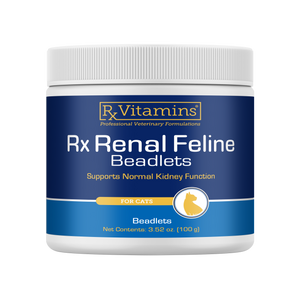
For cats with renal concerns, speak with your veterinarian about kidney support supplements for cats rather than adjusting a home recipe alone.
A commercial complete diet is not a failure. For many cats, it is the better medicine.
Frequently Asked Questions
How much taurine does a cat need each day?
Most adult cats need roughly 250 to 500 mg of taurine daily. The exact amount depends on body weight, life stage, and diet composition. Cooked home diets lose taurine through heat and moisture, so a dedicated taurine source is recommended rather than relying on meat alone.
Can I use eggshell powder instead of a calcium supplement?
Eggshell powder provides calcium, but the dose is unreliable. Grind consistency changes density, and it supplies no trace minerals or magnesium. A formulated mineral complex delivers calcium alongside the other minerals in proportion, which matters because minerals compete for absorption.
Is bone meal safe for cats?
Bone meal supplies calcium and phosphorus, but quality and composition vary widely between products and batches. It also adds more phosphorus to a diet already high in it. A standardized mineral supplement gives more predictable results for home-prepared feline meals.
How long before a deficiency shows up in a home-cooked cat?
Timelines vary by nutrient. Veterinary guidance indicates thiamine deficiency can appear within weeks, taurine deficiency within months, and calcium deficiency over a year or two. Cats often look healthy throughout the early phase, which is why scheduled bloodwork matters.
Do I still need a supplement if I feed organ meat?
Yes. Organ meat improves vitamin and taurine content but does not correct the calcium to phosphorus ratio. Liver adds copper and vitamin A, which can create excess if overfed. Organ meat is a useful ingredient, not a balancing tool.
Can I use a dog vitamin and mineral supplement for my cat?
No. Cats have species-specific requirements, especially for taurine, arachidonic acid, and preformed vitamin A. Dog formulations are not built to those targets. Always use a product formulated for feline nutrition.
How often should a home-cooked cat have bloodwork?
Veterinary nutrition guidance recommends a physical examination with bloodwork every six months. The recipe itself should be reassessed annually, since feline requirements shift with age and published nutrient guidelines are updated as research advances.
Your Next Step
Home cooking for your cat is an act of care. It deserves the nutritional precision to match.
The three gaps are known: taurine, calcium, and trace minerals. You do not have to guess your way through them.
Give your recipe the mineral and taurine foundation it needs with Feline Minerals. Complete the picture with Rx Essentials for Cats.
Veterinary practices can request a wholesale account to dispense Rx Vitamins formulations directly.
Talk with your veterinarian before changing your cat's diet. Then build it properly, from the minerals up.
Trusted Supplements for Healthier, Happier Pets
Explore our most popular veterinarian-formulated supplements, thoughtfully developed to support your pet's everyday health and wellness.