In this guide
-
What L-carnitine does in a dog’s body
-
Why the heart needs it
-
Which dogs may benefit
-
What the research really shows
-
L-carnitine vs taurine
-
Is it safe for dogs?
-
Talk with your veterinarian
-
Meet LiquiCarn from RxVitamins
-
More heart support from RxVitamins
-
Frequently asked questions about L-carnitine in dogs
-
Next steps for your dog’s heart health
Your dog used to beat you to the front door. Now the walk ends early, and the tail wags a little slower.
Slowing down has many causes. Age, weight, diet and heart health all play a part. Only your vet can sort them out.
Here is what many owners miss. The heart never gets a day off. It needs a steady fuel supply, and L-carnitine in dogs helps deliver that fuel.
This guide explains how it works in plain words. You will learn which dogs may benefit and what the research does and does not show. You will also get questions to bring to your next vet visit.
Not sure where your dog fits? Start the conversation with your vet today. They can tell you whether nutritional heart support makes sense.
What Does L-Carnitine Do in a Dog’s Body?
L-carnitine is an amino acid-like nutrient that carries fatty acids into cell mitochondria. Those tiny power plants burn the fat for energy. Without enough carnitine, cells struggle to turn fat into usable fuel, and muscle tissue feels it first.
The Fat-to-Energy Shuttle
Think of L-carnitine as a delivery driver. Fatty acids are the cargo. The mitochondria are the factory that needs it.
The driver picks up the cargo and drops it at the door. The factory then makes ATP, the energy that powers every muscle contraction.
No driver means the cargo sits outside. The factory slows down. That is why carnitine matters for energy metabolism across the body.
Where Dogs Get Carnitine
Healthy dogs make their own. The liver and kidneys build it from the amino acids lysine and methionine.
Food adds more. Animal proteins such as beef, lamb and fish are natural sources. Plant foods contain very little.
Most dogs on a complete diet get what they need. A few dogs run short, and that is where the conversation with a vet begins.
Why Does the Heart Need L-Carnitine?
The heart gets most of its energy from burning fatty acids. L-carnitine moves those fats into heart cells so they can be turned into energy. Steady carnitine supply supports normal heart muscle energy metabolism, helping each beat stay strong and consistent.
A Heart That Runs on Fat
Your dog’s heart beats around the clock. It cannot rest, nap or coast.
That nonstop work demands constant fuel. Heart muscle relies mostly on fat for that fuel. Carnitine is the key that unlocks it.
This is why vets talk about carnitine when they discuss heart muscle support. The link between fat burning and heart energy is direct.
What Happens When Supply Runs Short
Low carnitine means less fuel reaches heart cells. Reports link carnitine shortfalls with weakened heart muscle in some dogs.
Signs of low energy can look ordinary at first:
-
Tiring quickly on walks
-
Less interest in play
-
Muscle weakness
-
Unusual lethargy
These signs overlap with many conditions. Please do not guess at the cause. A vet exam is the right first step.
Which Dogs May Benefit From L-Carnitine Support?
Dogs most often discussed for carnitine support include breeds prone to heart muscle disease, such as Boxers and Dobermans. Dogs on unusual diets, seniors, working dogs and dogs under cardiac care may also be candidates. Your vet decides based on exams and history.
Breeds Often Discussed With Vets
Some large and giant breeds appear often in carnitine conversations:
-
Boxers
-
Doberman Pinschers
-
Great Danes
-
Irish Wolfhounds
-
American Cocker Spaniels
Reports describe lower carnitine levels in some dogs from these breeds. A Cornell case report even found low carnitine and low taurine in a Cocker Spaniel with a weakened heart.
Breed alone does not decide anything. It simply tells your vet where to look closer.
Dogs on Unusual Diets
Diet shapes carnitine intake. A published case described a dog on a strict vegetarian diet who needed extra help.
Home-prepared meals can also miss the mark. If you cook for your dog, share the recipe with your vet.
Learn more about covering the basics in our guide to the vitamins and minerals your dog needs.
Senior and Working Dogs
Older dogs may make less carnitine on their own. Active dogs burn more fuel during hard work.
Studies in exercising Labrador Retrievers looked at how carnitine builds up in muscle after training. The research is still growing.
For these dogs, a vet may suggest nutritional support alongside a balanced diet. It should never replace one.
Dogs Already Under Cardiac Care
Some dogs already see a veterinary cardiologist. Carnitine may be part of a larger nutrition plan for them.
If your dog has a heart diagnosis, never add a supplement on your own. Ask the care team first. They know the full medication picture.
What Does the Research Really Show?
Research shows carnitine matters for heart muscle energy, but results vary by dog. Some case reports describe improvement after supplementation, while others show no change. One review notes limited direct evidence overall, so vets weigh each dog individually.
Where Results Look Encouraging
Heart tissue holds much more carnitine than blood does. That fact explains why the heart is so sensitive to supply.
Several case reports describe dogs doing better after carnitine support. One Labrador with a weakened heart showed clear gains in a published report.
Veterinary nutrition guides also list L-carnitine as a nutrient of interest for heart muscle energy.
Where Results Are Mixed
The picture is not simple. A Boxer case report found that raising tissue carnitine did not resolve heart disease in one dog.
Blood tests add another wrinkle. Plasma levels do not always match carnitine levels inside heart muscle.
A well-known review urged vets to weigh evidence strength, cost and risk. We agree. Honest guidance builds trust, and your dog deserves it.
L-Carnitine vs Taurine: What Is the Difference?
L-carnitine fuels heart cells by moving fat into mitochondria for energy. Taurine is an amino acid that supports heart muscle function and structure. They do different jobs, and vets often consider both when reviewing a dog’s heart nutrition.
|
L-Carnitine |
Taurine |
|
|
Main job |
Moves fat into cells for energy |
Supports heart muscle function |
|
Think of it as |
The fuel driver |
The structural support |
|
Found in |
Red meat, fish, poultry |
Meat, fish, shellfish |
|
Often discussed for |
Heart energy, muscle, working dogs |
Heart function, certain breeds |
Both nutrients appear in heart nutrition conversations. Some dogs run low on both, as the Cornell case showed.
Do not pick one on a hunch. Ask your vet whether either nutrient deserves a closer look.
Is L-Carnitine Safe for Dogs?
L-carnitine is generally well tolerated in dogs at appropriate amounts. Some dogs may develop loose stools, especially as amounts increase. Always choose the L-form, and work with your veterinarian on suitability, amounts and monitoring rather than starting a supplement on your own.
The L-Form Matters
Dogs use only L-carnitine. Their bodies do not convert other forms.
Some over-the-counter products contain D- or DL-carnitine. Veterinary sources warn that these can interfere with normal carnitine use.
Check the label every time. If the form is unclear, skip the product.
Why Testing Is Not Simple
Confirming low carnitine in heart muscle can require a biopsy. That is rarely practical.
Vets often look at the whole picture instead:
-
Breed and age
-
Diet and body condition
-
Heart imaging and exam findings
-
Other lab work
This is why a guess at home does not work. Your vet connects the dots.
Digestive Upset
Loose stools are the most reported side effect. They tend to show up as amounts rise.
Tell your vet if you see changes. They can adjust the plan.
Monitoring Over Time
Dogs under heart care need regular rechecks. PetMD notes that vets often repeat heart imaging every few months after starting carnitine.
Follow-up shows what is working. It keeps your dog’s plan honest.
Talk With Your Veterinarian About L-Carnitine Support
You do not need to arrive with answers. You only need good questions.
Bring these to your next visit:
-
Is my dog’s breed or diet a reason to look at carnitine?
-
Should we check taurine as well?
-
Which form and format suit my dog?
-
How will we track whether the plan is working?
-
Which other heart nutrients are worth discussing?
Write down what you have noticed at home. Note energy, appetite and exercise changes.
Vets value those details. They often reveal more than a single exam can.
Veterinary clinic staff can contact our team with product questions anytime.
Meet LiquiCarn From RxVitamins
RxVitamins has formulated veterinary supplements for over two decades. Our products are veterinarian-exclusive, so every recommendation starts with a professional.
When your vet suggests an L-carnitine supplement for dogs, LiquiCarn is our answer.
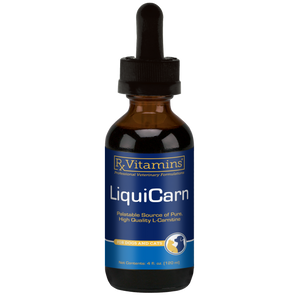
What it is: A pure L-carnitine liquid in a liver-bacon flavor. It comes in a 120ml amber glass bottle with a graduated dropper.
Why that matters:
-
The liquid format is easy to give, whether on food or by mouth.
-
The dropper helps your vet’s dose stay accurate.
-
The amber glass helps protect the formula.
-
The flavor makes dosing less of a daily struggle.
What you gain: A simple routine your dog accepts. You get confidence that your vet’s plan is easy to follow.
LiquiCarn also suits cats, which gives mixed households one trusted option.
Ask your vet whether LiquiCarn fits your dog’s plan.
More Heart Support From RxVitamins
Carnitine is one piece of a larger heart plan. Our pet heart health supplements collection groups the options in one place.
Two other formulas appear beside LiquiCarn there:
-
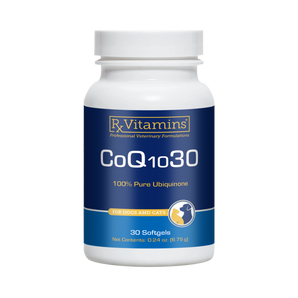
CoQ10-30 Pet supports cellular energy with an antioxidant that heart muscle produces naturally.
-
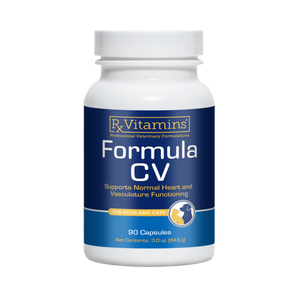
Formula CV offers broader cardiovascular nutrition in one formula.
Want a wider view? Read our guide to the best cardio supplement for pets. It compares what each nutrient brings to the table.
Your vet can help you pick a combination that fits your dog’s age and lifestyle.
Frequently Asked Questions About L-Carnitine in Dogs
Does L-carnitine help dogs with heart disease?
L-carnitine supports heart muscle energy by moving fatty acids into cells. Some dogs show improvement in published reports, while others do not. Results vary by breed and condition. Dogs with heart disease need veterinary care first. Nutritional support, if used, should be part of a plan your vet designs.
Which dog breeds may need extra carnitine?
Boxers, Doberman Pinschers, Great Danes, Irish Wolfhounds and American Cocker Spaniels appear most often in carnitine discussions. Reports link some of these breeds with lower carnitine levels. Breed is only a clue, though. Your vet considers diet, age and heart exam findings before suggesting anything.
What is the difference between L-carnitine and taurine?
L-carnitine moves fat into cells so the heart can make energy. Taurine supports heart muscle function and structure. They do different jobs, and some dogs run low on both. Vets may review both nutrients together. Ask your veterinarian which one deserves attention for your dog.
Can dogs take human L-carnitine?
Dogs need the L-form. Some human products contain D- or DL-carnitine, which veterinary sources caution against. Human products may also include other ingredients and different amounts. Please check with your vet before sharing any human supplement. A veterinarian-formulated product removes the guesswork.
How long does L-carnitine take to work?
There is no single timeline. Some case reports describe changes over weeks to months, and others show no change at all. Your vet usually rechecks heart health every few months to see what is working. Patience and follow-up matter more than quick results.
Is L-carnitine safe for dogs?
L-carnitine is generally well tolerated by dogs when the L-form is used at suitable amounts. Loose stools are the most reported side effect. Dogs with heart or kidney concerns should only start under veterinary guidance. Always tell your vet about every supplement your dog receives.
Next Steps for Your Dog’s Heart Health
Your dog gives you everything. A strong heart helps them keep doing it.
Here is your simple path forward:
-
Note any changes in energy, stamina or appetite.
-
Book a vet visit and bring the questions above.
-
Ask whether L-carnitine in dogs fits your dog’s plan.
-
Follow up on a schedule your vet sets.
Veterinary clinics and retailers can open a wholesale account to access RxVitamins formulas at professional pricing. Applying is quick and simple.
Pet owners can ask their vet about RxVitamins. Questions? Call us at 800-792-2222 or email info@rxvitamins.com.
Learn more about our story on the About page.
This article is for education only. It does not diagnose, treat or prevent any condition. Always consult your veterinarian before starting any supplement.