Minerals for Dogs on a Home-Prepared Diet: What Homemade Food Is Missing
You cook for your dog because you love your dog. That instinct is right.
But here is the uncomfortable truth. Most homemade dog food recipes are missing essential minerals. Calcium tops the list, followed by zinc, copper, manganese, iodine, and selenium. Fresh meat, rice, and vegetables deliver protein and calories. They do not deliver a balanced mineral profile. Without targeted supplementation, the gap widens quietly over months.
The good news? You do not have to stop cooking. You just have to stop guessing.
This guide shows you exactly what your dog's bowl is missing. It also shows you how to close that gap with confidence.
Why Home-Prepared Dog Diets Fall Short on Minerals
Home cooking fails on minerals for one simple reason. Whole foods were never designed to hit canine nutrient targets.
Researchers at UC Davis analyzed 200 homemade dog food recipes. Nearly all of them lacked at least one essential nutrient. Most lacked several. Separate published analyses found that minerals were the most common shortfall of all.
These recipes came from veterinary textbooks, pet care books, and websites. Many were written by professionals. The gap is not about effort. It is about formulation math.
Reference standards like the NRC (National Research Council), AAFCO, and FEDIAF set specific mineral requirements for dogs. Hitting those numbers with chicken, sweet potato, and spinach alone is close to impossible.
Your dog may look fine today. Mineral shortfalls rarely show symptoms early. They build slowly, which is exactly why they go unnoticed.
So the question is not whether your recipe has gaps. The question is which ones.
Macrominerals vs Trace Minerals: What Your Dog Actually Needs
Dogs need two categories of minerals. Both matter. Most home cooks only think about one.
Macrominerals are needed in larger amounts. Trace minerals are needed in tiny amounts, but a shortage still causes real problems.
|
Mineral |
Type |
What It Supports |
Common Food Sources |
|
Calcium |
Macro |
Normal bone structure, nerve signaling |
Bone, ground eggshell, dairy |
|
Phosphorus |
Macro |
Bone matrix, energy metabolism |
Meat, organ meat, fish |
|
Magnesium |
Macro |
Muscle and nerve function |
Leafy greens, seeds |
|
Potassium |
Macro |
Fluid balance, heart rhythm |
Meat, bananas, potatoes |
|
Sodium, Chloride |
Macro |
Hydration and nerve transmission |
Added salt, broths |
|
Zinc |
Trace |
Skin, coat, and immune function |
Red meat, shellfish |
|
Copper |
Trace |
Connective tissue, coat pigment |
Liver, organ meats |
|
Iron |
Trace |
Oxygen transport in blood |
Red meat, liver |
|
Manganese |
Trace |
Cartilage and joint tissue |
Shellfish, whole grains |
|
Selenium |
Trace |
Antioxidant defense |
Fish, Brazil nuts |
|
Iodine |
Trace |
Normal thyroid function |
Kelp, seafood |
Look at that right-hand column again. Almost none of those foods appear in a typical home-cooked rotation.
That is the gap. And it is wider than most owners expect.
Calcium: The Mineral Most Often Missing From Homemade Meals
Calcium is the single most common deficiency in home-prepared dog diets. The reason is straightforward.
Muscle meat is loaded with phosphorus. It contains almost no calcium. So the more meat you feed, the further the balance tips in the wrong direction.
Commercial dog food solves this with added calcium. Your kitchen does not.
Published veterinary literature links long-term calcium shortfalls in home-fed dogs to skeletal problems, including nutritional secondary hyperparathyroidism. Growing puppies and large breeds carry the highest risk.
Here is the part most blogs skip. Adding calcium is not optional for a bone-free homemade diet. It is foundational.
If your dog eats home-cooked meals without bone, calcium supplementation belongs in the plan. Follow your product label or your veterinarian's direction for the correct amount.
Why the Calcium to Phosphorus Ratio Matters More Than the Amount
Dogs need calcium and phosphorus in balance, not just in quantity. Published guidelines indicate a calcium to phosphorus ratio between 1:1 and 2:1 for healthy adult dogs. Meat-heavy homemade meals often land near 1:4, which is badly inverted. Correcting the ratio matters more than simply adding calcium.
Think of it like a seesaw. Pile phosphorus on one side without calcium on the other, and the body compensates.
High phosphorus also blocks calcium absorption. So a diet short on calcium and heavy on meat creates a double problem.
Puppies need extra care here. Both too little and too much calcium can disrupt normal bone development in large breeds.
This is why eyeballing it does not work. Ratios require a formulated supplement, not a guess.
Your veterinarian can review your specific recipe and confirm the right targets for your dog.
The Trace Minerals Almost Nobody Adds
Here is where nearly every homemade feeding guide stops short. They cover calcium and walk away.
Trace minerals get ignored. That is a serious oversight.
Zinc is the most commonly deficient trace mineral in dogs today. It supports healthy skin, a normal coat, and immune function. Home diets rarely supply enough.
Copper supports connective tissue and natural coat pigment. Without organ meat, home diets fall short fast.
Manganese supports cartilage and joint tissue. It is nearly absent from most kitchen ingredients.
Selenium supports antioxidant defense. Iodine supports normal thyroid function. Neither appears in meaningful amounts unless you feed kelp or seafood regularly.
Iron supports oxygen transport. Muscle meat helps, but levels vary widely by cut.
Notice the pattern. Every one of these minerals requires a food that most home cooks never buy.
A calcium-only fix leaves six gaps wide open. If your supplement does not cover the full spectrum, consider a complete mineral supplement for dogs built for home-prepared feeding.
Why Eggshell, Bone Meal, and "A Little Yogurt" Are Not Enough
Most home cooks already try to fix the calcium gap. The effort is right. The tools are incomplete.
Ground Eggshell
Eggshell is a legitimate calcium source. It is cheap and easy. But it delivers calcium and almost nothing else.
Zero zinc. Zero copper. Zero manganese. Your trace mineral gaps stay exactly where they were.
Bone Meal
Bone meal supplies calcium and phosphorus together. That sounds ideal, but it complicates the ratio you are trying to correct.
Quality also varies sharply between products. Sourcing and purity matter more than most labels reveal.
Dairy and Leafy Greens
Yogurt and kale get recommended constantly. The calcium they contribute is small.
You would need impractical volumes to move the needle. Meanwhile the trace minerals remain missing.
None of these shortcuts are wrong. They are simply partial. A balanced bowl needs full-spectrum coverage.
When Your Dog May Not Need Added Calcium
We would rather tell you the truth than sell you something you do not need.
Skip added calcium if any of these apply to your dog:
-
Raw meaty bones make up 25 to 30 percent of the diet. Bone already supplies calcium and phosphorus together.
-
Your dog eats complete and balanced commercial food as the base. Those formulas are already balanced. Adding more can create an excess.
-
You feed a diet formulated by a board-certified veterinary nutritionist. The calcium is already calculated in.
Large breed puppies deserve extra caution. Over-supplementing calcium during growth can disrupt normal skeletal development.
When in doubt, ask your veterinarian before adding anything. A quick recipe review prevents months of guesswork.
What to Look For on a Mineral Supplement Label
Not all mineral powders are built the same. Use these four filters before you buy.
1. Bioavailable Mineral Forms
Look for chelated minerals or naturally occurring mineral complexes. These forms are easier for the body to absorb than cheap inorganic fillers.
2. Source Transparency
A quality brand tells you where its minerals come from. Vague sourcing usually means a commodity blend.
3. NASC Compliance
The National Animal Supplement Council sets quality standards for pet supplements. NASC compliance signals real manufacturing oversight.
4. No Flavors, No Fillers
Flavorings and binders add nothing nutritionally. For sensitive or allergy-prone dogs, they create risk.
Unflavored and hypoallergenic is the cleaner choice. It also mixes into home-cooked food without changing taste.
Canine Minerals was built against exactly these criteria.
Minerals vs Multivitamin: Two Different Jobs
This confuses almost every home cook. Let us settle it clearly.
A mineral supplement supplies calcium and the macro and micro minerals your recipe lacks. It handles the structural side.
A multivitamin supplies vitamins A, D, E, the B complex, and antioxidant support. It handles the metabolic side.
One does not replace the other. Most multivitamins contain only token mineral amounts.
A home-prepared diet needs both. That is not an upsell. That is nutritional arithmetic.
Pairing the two is the simplest way to cover a homemade bowl completely.
How RX Vitamins Supports Home-Prepared Feeding
RX Vitamins has formulated veterinarian-grade supplements since 1998. Our products reach pet owners through veterinary professionals, not mass retail shelves.
That channel shapes everything we make.
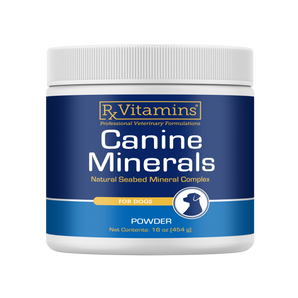
Canine Minerals: A Natural Seabed Mineral Complex
Canine Minerals delivers 9 macro and micro minerals in one unflavored powder. The source is a 100 percent natural mineral compound, mined from an exclusive deposit in the western United States.
What that means for your dog:
-
Calcium plus 8 more minerals in one scoop. You stop stacking three products to cover one gap.
-
100 percent pure and hypoallergenic. No flavorings, no adulterants, nothing added. Safe for sensitive dogs.
-
Completely unflavored. It disappears into home-cooked food. Picky eaters never notice.
-
Natural mined source, not a synthetic blend. You know exactly what is in the jar.
It was designed for one purpose. Balancing home-prepared meals.
Rx Essentials for Dogs: The Companion Multivitamin
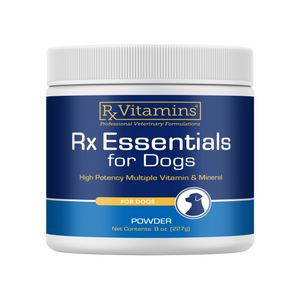
Rx Essentials for Dogs covers the vitamin half of the equation. It delivers a full range of daily vitamins plus organically chelated minerals, with spirulina, kelp, and milk thistle.
Paired with Canine Minerals, it completes the home-cooked bowl.
Why Veterinarian Formulated Matters
Anyone can print a label. Few brands answer to veterinarians.
RX Vitamins formulates to NASC standards, with veterinary input at every stage. That is 27 years of clinical feedback built into every product.
Ready to close the gap in your dog's bowl?
Shop Canine Minerals
Explore everyday wellness supplements for dogs
These products are not intended to diagnose, treat, cure, or prevent any disease.
Questions to Bring to Your Veterinarian
Your vet is your best partner here. Bring this short list to your next visit.
-
Can you review my current homemade recipe for nutrient gaps?
-
What calcium to phosphorus ratio should my dog target?
-
Does my dog's age, breed, or size change mineral needs?
-
Should I run baseline bloodwork before adding supplements?
-
Is a mineral and toxic metal fur test worth doing?
-
How often should we reassess the diet?
Save these questions. Ten minutes of conversation can replace months of uncertainty.
Frequently Asked Questions
What minerals are missing from homemade dog food?
Calcium is the most common deficiency in homemade dog food. Zinc, copper, manganese, selenium, and iodine are also frequently short. Fresh meat and vegetables supply protein and calories, but not a complete mineral profile. Most home-prepared diets need a dedicated mineral supplement to meet published canine requirements.
How much calcium does a home-cooked dog diet need?
Calcium needs depend on your dog's weight, calorie intake, and the phosphorus level in the recipe. Published guidelines commonly reference roughly 800 to 1,000 mg of calcium per pound of fresh food fed. Always follow your supplement label and confirm the correct amount with your veterinarian.
Are eggshells enough calcium for my dog?
Ground eggshell supplies usable calcium, but nothing else. It contains no zinc, copper, manganese, selenium, or iodine. If eggshell is your only supplement, your dog's trace mineral gaps remain unaddressed. A full-spectrum mineral formula covers calcium and the trace minerals together.
What is the right calcium to phosphorus ratio for dogs?
Published guidelines indicate a calcium to phosphorus ratio between 1:1 and 2:1 for healthy adult dogs. Meat-heavy homemade meals often skew far lower because muscle meat is high in phosphorus. Correcting the ratio matters as much as the total calcium amount in the bowl.
Can I give my dog too many minerals?
Yes. Excess calcium can disrupt normal skeletal development, especially in large breed puppies. Over-supplementing trace minerals carries risks too. Follow label directions exactly and never stack multiple mineral products without veterinary guidance. More is not better with mineral supplementation.
Do puppies on homemade diets have different mineral needs?
Yes. Growing puppies need carefully controlled calcium and phosphorus levels, not simply higher ones. Large breed puppies are especially sensitive to both excess and shortfall. Any homemade puppy diet should be reviewed by a veterinarian or veterinary nutritionist before feeding.
How do I know if my dog's homemade diet is balanced?
You cannot confirm balance by appearance alone. Mineral shortfalls develop quietly over months. Have your recipe reviewed by a veterinarian or veterinary nutritionist against NRC or AAFCO standards. Pair that review with a formulated mineral and vitamin supplement for daily coverage.
Still unsure where your recipe stands? Browse the full RX Vitamins supplement range and talk to your veterinarian.
Keep Cooking. Close the Gap.
You chose home cooking for good reasons. Fresh ingredients. Full control. Real food in the bowl.
None of that changes today. Only the guesswork does.
Minerals for dogs on a home-prepared diet are not a nice-to-have. They are the difference between a good meal and a complete one.
Add the right mineral support. Pair it with a quality multivitamin. Then keep doing what you are already doing well.
Get Canine Minerals for your dog
Pair it with Rx Essentials for Dogs
Veterinarian formulated since 1998. Trusted by vets. Made for dogs who eat real food.
Trusted Supplements for Healthier, Happier Pets
Explore our most popular veterinarian-formulated supplements, thoughtfully developed to support your pet's everyday health and wellness.