Choosing Heart Supplements for Dogs and Cats
Heart supplements for dogs and cats are designed to provide nutritional support for normal cardiovascular function rather than replace a complete diet or veterinary care. When comparing options, it helps to look beyond a general "heart health" label and consider the formula, individual nutrients, product format, species, and your veterinarian's recommendations. Some pet owners may be looking for a comprehensive cardiovascular formula, while others may need a more focused source of a specific nutrient such as Coenzyme Q10 or L-Carnitine.
The cardiovascular system includes the heart and blood vessels that circulate blood throughout the body. Because normal cardiovascular function depends on several nutritional and metabolic processes, pet heart supplements can take different approaches to nutritional support. This is why two products in the same cardiovascular category may have very different ingredient profiles.
For dogs and cats already receiving veterinary care, your veterinarian is the best resource for determining whether a supplement belongs in the animal's routine. A supplement should not be used as a substitute for a veterinary examination, prescribed medication, or other care recommended for your pet.
What Should You Look for in a Pet Heart Supplement?
When comparing pet heart health supplements, start with the intended nutritional role of the formula. Look at the active ingredients, serving directions, product format, and whether the formula provides a single nutrient or combines several nutrients for broader cardiovascular support.
Rx Vitamins offers both focused nutritional products and a multi-ingredient cardiovascular formula. This makes it possible to discuss the specific nutritional approach with your veterinarian instead of treating every heart supplement as interchangeable.
Single-Nutrient vs. Multi-Ingredient Formulas
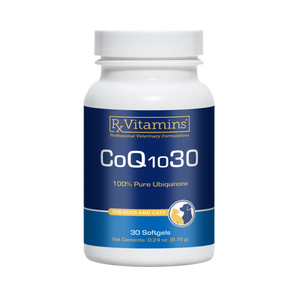
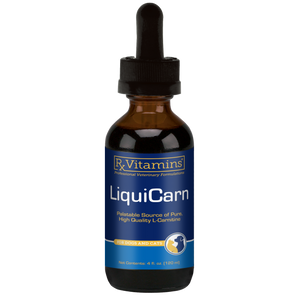
A single-nutrient supplement provides a more focused approach. For example, CoQ10-30 Pet provides Coenzyme Q10 as ubiquinone, while LiquiCarn provides L-Carnitine in a flavored liquid format. These options may be useful when a veterinarian wants to focus on a particular nutrient as part of an individual pet's nutritional plan.
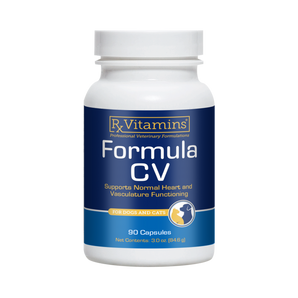
A multi-ingredient product takes a different approach. Formula CV combines several nutrients associated with normal cardiovascular structure and function. Its formula includes taurine and carnitine along with potassium, magnesium, vitamin E, selenium and hawthorn berry. Choosing between a focused product and a combination formula should be based on your pet's nutritional needs and veterinary guidance, not simply on the number of ingredients in the product.
Consider the Supplement Format
Administration matters because a supplement only fits a routine when it can be given consistently according to its directions. Pet owners comparing dog heart supplements should therefore consider the product format as well as its ingredients.
CoQ10-30 Pet comes in soft gelatin capsules containing ubiquinone. LiquiCarn provides L-Carnitine in a palatable liver-bacon flavored liquid and includes a graduated dropper. Formula CV provides a combination cardiovascular formula. Reviewing the individual product page before purchasing gives you the specific formula details and directions you need to discuss with your veterinarian.
Common Nutrients in Cardiovascular Supplements for Pets
Several nutrients appear frequently in canine and feline cardiovascular formulas because of their roles in normal cellular, muscular, antioxidant, or cardiovascular processes. Understanding these roles can make ingredient labels easier to compare without assuming that every pet needs every cardiovascular nutrient.
Coenzyme Q10
Coenzyme Q10, commonly shortened to CoQ10, is associated with cellular energy processes and antioxidant activity. It is naturally present in the body and is commonly included in pet cardiovascular supplements. Pet owners searching for CoQ10 for dogs or cats should pay attention to the actual form and amount supplied by the individual product rather than assuming all CoQ10 supplements are identical.
Rx Vitamins CoQ10-30 Pet contains 100% pure ubiquinone in a soft gelatin capsule. This provides a focused CoQ10 option rather than combining the nutrient with a large cardiovascular ingredient blend.
L-Carnitine
L-Carnitine is an amino acid-related compound involved in normal energy metabolism. One of its important physiological roles is helping transport long-chain fatty acids into mitochondria, where they can participate in cellular energy production. Because cardiac muscle has substantial energy requirements, L-Carnitine is commonly encountered when comparing nutritional formulas intended for cardiovascular support.
Pet owners specifically looking for an L-Carnitine supplement can explore LiquiCarn. Its liquid format provides another administration option for owners who may prefer measuring a liquid rather than giving a capsule.
Taurine
Taurine is an amino acid found in high concentrations in heart muscle and is another nutrient commonly associated with pet cardiovascular nutrition. Taurine and L-Carnitine are often discussed together because they have different physiological roles, even though both may appear in cardiovascular formulas.
Rather than assuming that a taurine-containing formula is automatically appropriate for every dog or cat, consider the complete diet, the supplement's full ingredient profile, and your veterinarian's recommendations. Formula CV includes taurine as part of its broader cardiovascular formulation.
Antioxidant Nutrients and Minerals
Cardiovascular formulas may also contain antioxidant nutrients and minerals. Formula CV, for example, includes vitamin E and selenium as well as potassium and magnesium. These ingredients have different nutritional and physiological roles, which is why evaluating a combination formula involves looking at the complete formulation rather than focusing on a single ingredient name.
How to Compare Dog Heart Health Supplements
The best way to compare heart supplements for dogs is to match the product's intended nutritional role with the individual dog's needs. Start by asking whether you are looking for general cardiovascular nutritional support or a particular nutrient recommended by your veterinarian. Then compare the ingredients and administration format of the available options.
It is also useful to consider what your dog already receives through food, other supplements, and veterinary-directed products. Adding several supplements without reviewing overlapping ingredients can make a routine unnecessarily complicated. Bring the labels or ingredient lists of products your dog already receives when discussing supplementation with your veterinarian.
Age alone should not determine whether a dog needs a cardiovascular supplement. Adult and senior dogs can have different nutritional requirements, but supplement decisions should consider the individual animal rather than relying on age as the only factor. The same principle applies to breed and size.
For owners exploring nutritional support beyond cardiovascular health, Rx Vitamins also organizes its veterinary-formulated products by category. You can browse all pet supplement collections to compare options for digestive, kidney, liver, joint, immune, behavioral and other normal health-support needs.
Can Cats Use Cardiovascular Supplements Too?
Some cardiovascular supplements are formulated for both dogs and cats, but species suitability should always be verified on the individual product. Dogs and cats do not have identical nutritional requirements, so a product should never be assumed suitable for a cat simply because it is marketed for pets generally.
Formula CV is presented by Rx Vitamins for dogs and cats and is formulated to support normal heart and vasculature functioning. CoQ10-30 Pet is also offered as a pet CoQ10 product. Check the individual product information and speak with your veterinarian before introducing a new supplement, particularly when your cat already receives other supplements, a specialized diet, or veterinary-directed care.
When Should You Ask Your Veterinarian About Heart Supplements?
Talk with your veterinarian before adding a heart supplement when you are unsure which nutrient or formula is appropriate, when your pet already takes other supplements or medications, or when you are considering supplementation because of a change in your pet's health. Veterinary guidance is especially important because similar-looking cardiovascular products can contain very different ingredients and concentrations.
If a veterinarian has suggested nutritional cardiovascular support, ask what the nutritional goal is. Knowing whether the recommendation involves a specific nutrient or broader cardiovascular support makes it easier to compare products intelligently. You can then review ingredient labels, formats and serving information with that goal in mind.
A pet showing new or concerning changes should receive appropriate veterinary attention rather than relying on a supplement to address the problem. Cardiovascular supplements are intended to provide nutritional support and should not be treated as replacements for diagnosis or veterinary treatment.
Frequently Asked Questions About Pet Heart Supplements
What are heart supplements for dogs?
Heart supplements for dogs are nutritional products formulated to support normal cardiovascular function or provide nutrients associated with normal cardiac and cellular processes. Depending on the formula, they may contain individual nutrients such as CoQ10 or L-Carnitine, or a combination of cardiovascular-support ingredients.
What vitamins and nutrients are commonly found in dog heart supplements?
Dog heart supplements can contain nutrients such as Coenzyme Q10, L-Carnitine, taurine, vitamin E, selenium, potassium and magnesium, depending on the product. Not every cardiovascular supplement contains all of these ingredients, and more ingredients do not automatically make a formula better for an individual dog.
What is the difference between CoQ10 and L-Carnitine for pets?
CoQ10 and L-Carnitine have different roles in the body. CoQ10 participates in cellular energy processes and has antioxidant activity, while L-Carnitine is involved in transporting long-chain fatty acids into mitochondria for energy metabolism. A veterinarian can help determine whether either nutrient is appropriate for your pet's nutritional plan.
Can I give my dog a heart supplement every day?
Daily use depends on the specific product and your dog's individual needs. Follow the serving directions provided for the supplement and ask your veterinarian about ongoing use, particularly if your dog receives medications, other supplements, or a specialized diet.
Are heart supplements a replacement for veterinary care?
No. Pet heart supplements provide nutritional support and are not replacements for veterinary examinations, diagnosis, prescribed medications, or treatment. If you are concerned about your dog's or cat's cardiovascular health, consult your veterinarian rather than relying on supplementation alone.
How do I choose between different cardiovascular supplements?
Compare the intended nutritional purpose, active ingredients, species suitability, format and serving directions. A focused CoQ10 or L-Carnitine product serves a different nutritional purpose from a multi-ingredient cardiovascular formula. Your veterinarian can help you decide which approach best fits your pet's nutritional needs and existing care plan.

 CoQ10-30 Haustier $29.39 /
 Formel-Lebenslauf $48.29 /
 LiquiCarn $49.39 /