Seabed Minerals and Taurine - What Your Cat's Bowl May Still Be Missing
You weigh the meat. You rotate the proteins. You skip the cheap kibble.
And your cat still may be short on nutrients you never thought to measure.
That gap is exactly why seabed minerals for cats have moved from a niche topic to a regular conversation in veterinary exam rooms. Cats do not build their own taurine well. They also cannot mine calcium out of muscle meat. Two quiet shortfalls, one bowl.
This guide explains what your cat actually needs, why home-prepared and raw diets often miss it, and how a natural seabed mineral complex closes the gap.
Why Cats Need Nutrients No Other Pet in Your House Needs
Your dog can make taurine. Your cat cannot make nearly enough.
Cats are obligate carnivores. Their bodies evolved to pull specific nutrients straight from prey, not to manufacture them internally. Taurine is the clearest example. Cats produce very little of it, and they store very little of it.
That combination leaves almost no buffer. A diet running low on taurine can stay low for months before anything looks different on the outside.
Minerals follow the same rule. Muscle meat is rich in phosphorus but poor in calcium. A bowl built mostly from meat tips the mineral balance in one direction and stays there.
This is why feline nutrition is not dog nutrition scaled down. Different biology, different requirements, different supplements.
What Taurine Actually Does Inside Your Cat's Body
Taurine is a sulfur-containing amino acid that cats must get from their diet. It supports normal heart muscle function, healthy vision, bile formation, reproductive health, and immune function. Cats have limited ability to synthesize taurine and limited storage capacity, which makes consistent dietary intake essential for every life stage.
Here is where taurine works day to day:
-
Cardiac muscle function. Supports the normal contraction of heart muscle tissue.
-
Retinal health. Supports normal function of the light-sensitive cells behind the eye.
-
Bile salt production. Cats bind bile acids almost exclusively with taurine.
-
Reproduction and kitten development. Supports normal pregnancy and early growth.
-
Immune response. Supports normal white blood cell activity.
-
Mineral and electrolyte regulation. Helps maintain normal calcium handling inside cells.
That last point matters more than most owners realize. Taurine and minerals are not two separate topics. They work together.
Where Modern Feeding Falls Short
Good intentions do not equal complete nutrition. Here is where the gaps usually open.
Home-Prepared and Recipe-Based Diets
Published research on home-prepared feline recipes has been consistently unflattering. One widely cited review of 114 homemade cat diet recipes found that none met all established nutritional allowances for essential nutrients.
Veterinary nutritionists have made the same point plainly. Most home diets are short on more than taurine alone.
The problem is not the cook. The problem is that a recipe written for flavor cannot balance nine minerals by accident.
Raw and BARF Rotations
Raw feeders often assume bone content handles the mineral side. Sometimes it does. Often it does not.
Bone-in ratios vary by supplier, by cut, and by batch. A rotation that ran well last month can drift this month without any visible sign.
Toppers, Treats and Shared Dog Food
Treats and toppers dilute a balanced base diet. Dog food dilutes it faster, because canine formulas are not supplemented for feline taurine needs.
If your cat regularly raids the dog bowl, the math quietly changes.
If any of this sounds like your kitchen, Feline Minerals is the formula veterinarians reach for to steady the mineral and taurine side of the bowl.
Macro-Minerals vs. Trace Minerals: A Plain-English Breakdown
Macro-minerals are nutrients cats need in larger daily amounts, including calcium, magnesium, phosphorus, potassium and sodium. Trace minerals, also called micro-minerals, are needed in very small amounts but remain essential. These include iron, manganese, chromium and strontium. Both groups must be present for normal body function.
|
Macro-Minerals |
Trace Minerals |
|
|
Daily amount |
Milligrams to grams |
Micrograms to milligrams |
|
Examples |
Calcium, magnesium, phosphorus, potassium, sodium |
Iron, manganese, chromium, strontium |
|
Main roles |
Bone structure, muscle and nerve signaling, fluid balance |
Oxygen transport, enzyme activity, metabolic support |
|
Common gap |
Calcium runs low in meat-based bowls |
Rarely tracked at all in home recipes |
The trace column is where most owners have no visibility. You can estimate calcium. Almost nobody estimates manganese.
What "Seabed Minerals" Actually Means
Not all mineral supplements start in the same place. Source shapes everything.
Mined From an Ancient Seabed Deposit
The mineral blend in RX Vitamins Feline Minerals comes from an ancient seabed deposit in northwestern Nevada. It is a naturally occurring mineral compound, mined from a single exclusive source in the western United States.
That origin carries real practical weight. The blend contains no mammal by-products at all. For cats with protein sensitivities, and for households that avoid animal-derived ingredients, that is a meaningful distinction.
Whole Mineral Matrix vs. Synthetic Isolates
Many supplements assemble minerals one synthetic ingredient at a time. A seabed mineral complex arrives as an intact matrix of mineral carbonates, already present together the way geology deposited them.
The formula is also 100% pure and hypoallergenic. No flavorings. No preservatives. No fillers riding along.
This is the detail almost no competing article mentions. Ask where the minerals came from before you ask what they cost.
The Nine Minerals in a Seabed Complex and What Each Supports
RX Vitamins Feline Minerals delivers nine macro and micro-minerals plus added L-taurine. Here is the role each one plays.
-
Calcium. Supports normal bone and tooth structure, muscle contraction and nerve signaling.
-
Magnesium. Supports normal enzyme activity and energy metabolism.
-
Iron. Supports normal oxygen transport in the blood.
-
Strontium. Supports normal bone matrix composition.
-
Sodium. Supports normal fluid and electrolyte balance.
-
Manganese. Supports normal connective tissue and antioxidant enzyme function.
-
Phosphorus. Works with calcium to support normal skeletal structure.
-
Potassium. Supports normal cellular and muscle function.
-
Chromium. Supports normal carbohydrate metabolism.
-
L-Taurine. Supports normal cardiac, visual and immune function.
Ten nutrients. One unflavored scoop. No second product to remember.
Calcium and Phosphorus: Why the Ratio Beats the Amount
Cats need calcium and phosphorus in balance, not just in quantity. Muscle meat is naturally high in phosphorus and low in calcium, so meat-heavy and home-prepared bowls tend to skew toward phosphorus. Supplementing calcium alone is not the answer either. The goal is a balanced ratio supported by consistent, measured mineral intake.
Think of it as a seesaw, not a checklist.
Adding more of one mineral without accounting for the other simply moves the imbalance. That is why a blended mineral complex behaves differently than a single-ingredient calcium powder.
Your veterinarian is the right person to set the target for your individual cat. Bring the label, not a guess.
For cats who also need broader daily vitamin coverage, Rx Essentials for Cats pairs naturally alongside a mineral formula.
How to Read a Guaranteed Analysis Before You Buy
Most supplement labels are written to reassure, not to inform. Use this checklist instead.
-
Named source. Does the label say where the minerals came from? Vague wording usually means a synthetic blend.
-
Per-scoop amounts. Look for exact milligram figures, not percentages of a mystery total.
-
Feline-specific taurine. Canine formulas skip it. Cats cannot.
-
Flavoring and preservatives. Added flavor often means added fillers, and picky cats notice.
-
Serving count. Divide the price by servings, not by ounces.
-
Formulator credentials. Who designed it, and for whom?
Run that checklist across the shelf. Very few products survive all six.
Here is how one does.
Feline Minerals from RX Vitamins: How Veterinarians Use It
RX Vitamins has formulated veterinary-exclusive nutraceuticals since 1998. Feline Minerals was built for one job: give cats a clean, measurable source of daily minerals and taurine.
Guaranteed Analysis Per 1/4 Teaspoon Scoop
|
Nutrient |
Amount |
|
Calcium |
250 mg |
|
Magnesium |
160 mg |
|
L-Taurine |
125 mg |
|
Iron |
0.34 mg |
|
Strontium |
0.14 mg |
|
Sodium |
0.10 mg |
|
Manganese |
0.04 mg |
|
Phosphorus |
0.04 mg |
|
Potassium |
0.02 mg |
|
Chromium |
3 mcg |
Dosing by Body Weight
|
Cat Weight |
Daily Serving |
|
0 to 5 lbs |
1/2 scoop with meals |
|
6 to 12 lbs |
1 scoop with meals |
|
13 to 20 lbs |
1.5 scoops with meals |
|
21 to 27 lbs |
2 scoops with meals |
A 1/4 teaspoon scoop is included. Always follow your veterinarian's direction.
Why Picky Cats Accept It
The powder is unflavored, hypoallergenic and free of preservatives. Nothing about it announces itself in the bowl.
Owners of suspicious eaters know exactly how much that matters. A supplement only works if it gets eaten.
What a Container Actually Costs Per Day
One 227 g container holds roughly 180 scoops. For an average 10 lb cat on one scoop daily, that is close to six months of coverage from a single jar.
Measured that way, complete mineral support costs less than most cats' weekly treat habit.
Shop Feline Minerals and talk with your veterinarian about the right daily serving for your cat.
Frequently Asked Questions
Do cats on commercial food still need a mineral supplement?
Most complete commercial cat foods meeting AAFCO nutrient profiles already supply required minerals and taurine. Supplementation is most relevant for cats eating home-prepared, raw, rotation or heavily topper-based diets. Your veterinarian can review your cat's current diet and advise whether added mineral support fits.
How much taurine does a cat need each day?
Daily taurine needs vary by body weight, life stage and diet type. RX Vitamins Feline Minerals supplies 125 mg of L-taurine per 1/4 teaspoon scoop, with servings scaled from half a scoop to two scoops by weight. Your veterinarian should confirm the right amount for your cat.
Can I use a human mineral supplement for my cat?
No. Human formulas are dosed for human body weight and often include ingredients cats tolerate poorly. They also rarely contain taurine, since humans synthesize their own. Use a product formulated specifically for cats and reviewed by your veterinarian.
Is a seabed mineral complex safe for kittens and senior cats?
Feline Minerals is a naturally sourced, hypoallergenic mineral compound with no flavorings or preservatives. Serving sizes are based on body weight rather than age. Kittens, adults and senior cats all have different needs, so confirm the appropriate serving with your veterinarian first.
Will my cat notice the taste?
The powder is completely unflavored and unadulterated. Most cats accept it mixed into wet food without hesitation. Start with a partial serving stirred thoroughly into a favorite meal if your cat is especially cautious about texture or new additions.
Can I give this alongside my cat's other supplements?
Often yes, but overlap matters. Stacking several products can push certain minerals higher than intended. Share your full supplement list with your veterinarian so the combined totals stay balanced. Browse cat supplements designed to work together.
How long before I see a difference?
Mineral and taurine support works gradually, not overnight. Nutritional status shifts over weeks and months, not days. Consistency is what produces value here. Keep servings steady and let your veterinarian monitor progress at routine checkups.
Does my cat need this if I feed it raw with bone?
Possibly. Bone content varies widely between suppliers, cuts and batches, so mineral levels drift even in careful rotations. Raw diets also rarely guarantee taurine levels after handling and storage. A measured mineral source removes the guesswork from both.
Talk to Your Veterinarian About Your Cat's Mineral Intake
You cannot see a mineral gap. You can only prevent one.
RX Vitamins has built veterinarian-formulated supplements since 1998, sold through veterinary channels rather than mass retail. Feline Minerals reflects that standard: a single natural seabed source, no mammal by-products, no flavorings, and exact amounts printed on every label.
Bring the guaranteed analysis to your next appointment. Ask whether your cat's current bowl covers calcium, taurine and trace minerals completely.
Order Feline Minerals for your cat, or request a wholesale account if you run a veterinary practice.
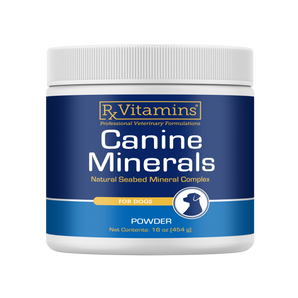
For multi-pet homes, Canine Minerals offers the same seabed mineral foundation formulated for dogs.
These statements have not been evaluated by the Food and Drug Administration. This product is not intended to diagnose, treat, cure or prevent any disease. Always consult your veterinarian before starting any supplement.
Trusted Supplements for Healthier, Happier Pets
Explore our most popular veterinarian-formulated supplements, thoughtfully developed to support your pet's everyday health and wellness.