Separation Anxiety vs. Noise Phobia in Dogs - Different Triggers, Different Support
Your dog shakes. He drools. He tears at the door frame.
Is it because you left the house? Or because thunder just cracked outside?
Most owners cannot tell the difference. That confusion costs time, and it costs your dog comfort.
Separation anxiety and noise phobia look almost identical on the surface. But they come from different places in your dog's brain, and they need different kinds of support.
This guide breaks down both conditions clearly. You will learn the real triggers, the telltale signs, and the calming strategies that match each one, backed by veterinary research and formulated by Rx Vitamins since 1998.
What's Really Going On: Two Conditions, One Set of Confusing Signs
Dogs cannot explain their fear. They just react.
That reaction often looks the same no matter the cause. Trembling, panting, and destructive chewing show up in both separation anxiety and noise phobia.
This overlap is exactly why so many pet parents guess wrong. They treat the trigger they assume, not the one actually happening.
Why Owners Mix Them Up
A dog that destroys the couch during a storm gets labeled anxious about being alone. A dog that barks the moment you grab your keys gets blamed for fearing noise.
Both labels can be wrong. The setting matters more than the symptom.
What Is Separation Anxiety in Dogs?
Separation anxiety is a fear response triggered by being away from you, not by any sound or event. It shows up the moment you leave, or sometimes even as you prepare to leave, and eases once you return.
Dogs are social animals. Being left alone can trigger genuine panic, not just boredom or bad manners.
This is not disobedience. It is a stress response rooted in attachment.
Common Signs of Separation Anxiety
-
Barking or howling only when left alone
-
Destructive chewing near doors and windows
-
Accidents indoors despite being house-trained
-
Pacing or drooling before you even leave
-
Attempts to escape crates or rooms
What Is Noise Phobia in Dogs?
Noise phobia is an intense fear reaction to specific loud or sudden sounds, such as thunder, fireworks, or construction noise. It can happen whether you are home or not, and it fades once the sound stops.
Some dogs are simply wired to react more strongly to sound. Herding breeds, in particular, show this sensitivity more often.
Unlike separation anxiety, your presence does not fully solve it. The trigger is the sound itself.
Common Signs of Noise Phobia
-
Hiding or trying to squeeze into tight spaces
-
Trembling that starts and stops with the noise
-
Panting or drooling only during loud events
-
Attempts to flee, even through windows or screens
-
Dilated pupils and pinned-back ears
Separation Anxiety vs. Noise Phobia: Side-by-Side Comparison
|
Factor |
Separation Anxiety |
Noise Phobia |
|
Trigger |
Owner absence |
Loud or sudden sounds |
|
Timing |
Starts when you leave |
Starts when the noise begins |
|
Ends when |
You return home |
The sound stops |
|
Present even if you're home |
No |
Yes |
|
Common causes |
Attachment, past abandonment, routine change |
Genetics, past trauma, breed sensitivity |
This table alone can help you narrow down what your dog is actually experiencing.
Can a Dog Have Both at the Same Time?
Yes. Veterinary research shows a strong overlap between the two conditions. One clinical study found dogs with noise phobia had an 88 percent chance of also showing separation anxiety.
This matters for how you approach support. A dog with both conditions often needs a broader, daily calming strategy, not just a one-time fix for a single trigger.
If your dog reacts to storms and also panics when alone, you are not imagining a pattern. The science backs it up.
Different Triggers Need Different Support
Once you know which condition you are facing, the right response becomes much clearer. Some strategies work for one condition, but not the other.
Many owners find their dog benefits most from a combined approach, addressing behavior and daily nutritional support together.
Behavioral Support for Separation Anxiety
Keep departures and arrivals low-key. No dramatic goodbyes, no big greetings.
Practice short absences first. Leave for two minutes, then five, then longer, building tolerance slowly.
Give your dog a safe space with familiar bedding and a worn piece of your clothing. Familiar scent can ease attachment-based stress.
Behavioral Support for Noise Phobia
Create a sound-dampened safe room before storms or fireworks season arrives. Interior rooms without windows work best.
Use white noise or calm music to mask sudden sounds. This reduces the startle response.
Desensitize gradually with recorded thunder or firework sounds at low volume, increasing slowly over weeks.
Nutraceutical Support: Matching Ingredients to the Condition
Behavior training takes time. Many owners look for daily nutritional support that works alongside it.
Rx Vitamins has formulated calming solutions for veterinarians since 1998, built around ingredients studied for their calming role in dogs.
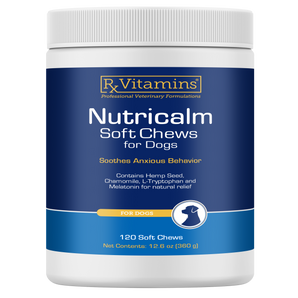
NutriCalm combines pharmaceutical-grade L-tryptophan with ashwagandha, theanine, and valerian root. L-tryptophan supports natural serotonin production, which plays a direct role in mood balance.
Ashwagandha and valerian root work as calming herbs, helping dogs settle without heavy sedation. Theanine, found naturally in green tea, supports relaxation without draining your dog's energy.
For smaller dogs or cats needing lower doses, the Liquid NutriCalm formula offers the same calming approach in a fast-absorbing liquid.
Explore the full calming and behavioral wellness collection to compare formats and find the right fit for your dog's size and routine.
Why Veterinarian-Exclusive, NASC-Compliant Formulas Matter
Rx Vitamins products carry the National Animal Supplement Council seal, meaning they meet strict quality and manufacturing standards. Every formula is developed with veterinary input, not guesswork.
This matters because not every calming product on the shelf meets the same bar. Choosing a veterinarian-formulated supplement brand gives you a layer of quality assurance most pet-store brands cannot match.
Rx Vitamins has supported veterinarians and pet owners since 1998. That track record is not a marketing line. It is a history of formulas built on nutritional science.
When to See a Veterinarian or Veterinary Behaviorist
Supplements and training help most dogs. Some cases need more.
Contact your veterinarian if you notice:
-
Destruction severe enough to injure your dog
-
No improvement after a consistent four-week trial
-
Anxiety in nearly every situation, not just specific triggers
-
Refusal to eat, drink, or use the bathroom during episodes
A veterinary behaviorist can rule out medical causes and build a full treatment plan when supplements alone are not enough.
Frequently Asked Questions
Do dogs outgrow noise phobia?
Rarely without intervention. Noise phobia tends to worsen over time if untreated, since fear responses often intensify with repeated exposure. Early desensitization and calming support give the best long-term results.
Is noise phobia genetic in dogs?
Research suggests a genetic component exists. Herding breeds show higher rates of noise sensitivity, pointing to inherited traits alongside environmental factors like early socialization and past trauma.
What's the fastest way to calm a dog with separation anxiety?
Short, gradual absence training works fastest long term. For immediate comfort, a familiar-scented item and a consistent safe space can reduce panic while you build tolerance through practice departures.
Can supplements replace prescription anxiety medication?
No. Supplements support mild to moderate stress, not severe clinical anxiety. Dogs with severe separation anxiety or noise phobia may need prescription medication alongside behavioral therapy, guided by your veterinarian.
How long does it take for calming supplements to work?
Most calming supplements need two to four weeks of consistent daily use. Ingredients like L-tryptophan and ashwagandha build gradual support rather than delivering instant sedation.
Give Your Dog the Right Kind of Support
Separation anxiety and noise phobia may look the same from the outside. They are not the same problem, and they do not need the same fix.
Now that you can tell them apart, you can act with confidence instead of guessing.
Explore Rx Vitamins' calming formulas and talk to your veterinarian about which daily support fits your dog's specific triggers.
Trusted Supplements for Healthier, Happier Pets
Explore our most popular veterinarian-formulated supplements, thoughtfully developed to support your pet's everyday health and wellness.